Category Archives: General

Why you can’t open aeroplane doors in flight

There have been many stories of people trying to open aeroplane doors whilst the aeroplane is in flight. Below is an explanation of why you shouldn’t worry if this happens during your flight.

The cruising altitude of most transport aeroplanes is about 38 000 feet (11 600 metres). At this altitude there is less air above the aeroplane pushing down upon it and thus the air pressure is lower. At 38 000 feet the air pressure is about 21 kilopascals (21 000 newtons per square metre) compared with 100 kilopascals (100 kPa) at ground level.

At this altitude there wouldn’t be enough oxygen present in the cabin air for people to breathe (this is why aeroplanes carry oxygen masks, in case the cabin depressurises for some reason). Therefore the cabin has to be kept pressurised to a greater level, usually to the equivalent of about 8000 feet (2440 metres). At 8000 feet the air pressure inside the cabin is about 75 kPa, more than three times the exterior pressure at cruising altitude. There is therefore a difference in pressure between the interior and exterior of the aeroplane of 54 kPa, or 54 000 newtons per square metre.

The passenger doors on a 747 (for example) are 1.19 metres wide by 1.93 metres tall, giving the door an area of 2.3 square metres. This means that there is a force of 124 000 newtons (54000 N/m2 × 2.3 m2) pushing the door closed. To put this in perspective, a force of 124 000 newtons is equivalent to the weight of 12.6 tonnes; so unless a passenger is some sort of Superman, capable of exerting a force bigger than this, the door will remain closed.
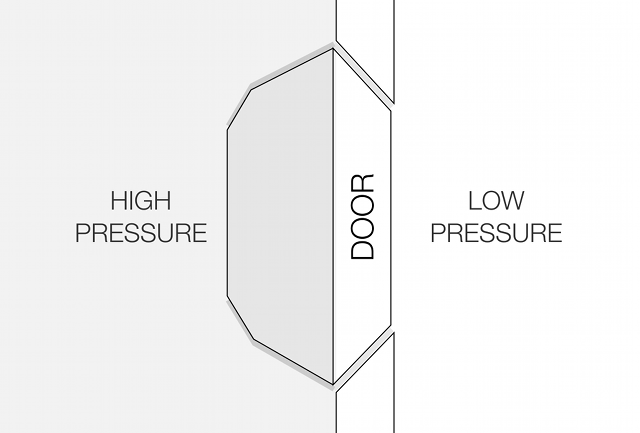
Aeroplane doors are wedge-shaped so that the fuselage bears this force, relying on the pressure differential rather than on some sort of internal locking mechanism to keep the door closed and maintain a good seal. The same is also true for spacecraft doors.

Thanks to JU for asking the question that prompted this post.
What are contrails?

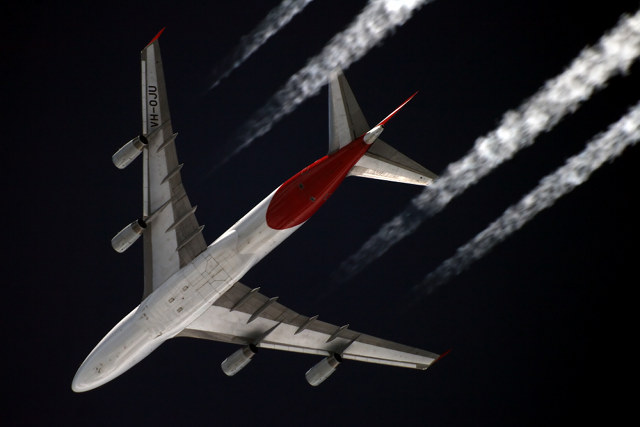
Contrails are artificial clouds that form behind aircraft flying at high altitude.

Jet fuel (also known as AVTUR for AViation TURbine fuel) is made up of long-chain hydrocarbons, from nonane (C9H20) to hexadecane (C16H34). When these long-chain hydrocarbons are burnt they combine with oxygen to form carbon dioxide and water. The water vapour in the plane’s exhaust condenses out (sometimes as ice) to form trailing artificial clouds known as contrails.

Military aircraft often have to be careful to avoid leaving contrails as it makes them very easy to spot. This can be done by adding chlorosulphuric acid to the exhaust, as the chlorosulphuric acid reacts with water to form sulphuric and hydrochloric acid which doesn’t condense out in the same way as water. However, it is usually easier for the pilot of the aircraft to simply decrease altitude until contrails cease forming.

Three different types of magnetism

When you think of magnetism the chances are that you’re only thinking of one type of magnetism: ferromagnetism. But there are two other types of magnetism: paramagnetism and diamagnetism, that are less well known.

Ferromagnetism is the only type of magnetism that produces forces large enough to be easily felt, and ferromagnetic materials are the only ones that demonstrate spontaneous magnetism – magnetism outside of an applied magnetic field. The most common ferromagnetic materials are those that contain iron, cobalt and nickel but other elements such as dysprosium and gadolinium and compounds such as chromium oxide and manganese bismide also demonstrate ferromagnetic properties.

Paramagnetic and diamagnetic effects only exist in the presence of an applied magnetic field: paramagnetic materials such as tungsten and aluminium create an attractive force when exposed to magnetic fields and diamagnetic materials such as pyrolytic carbon and mercury create a repulsive one.

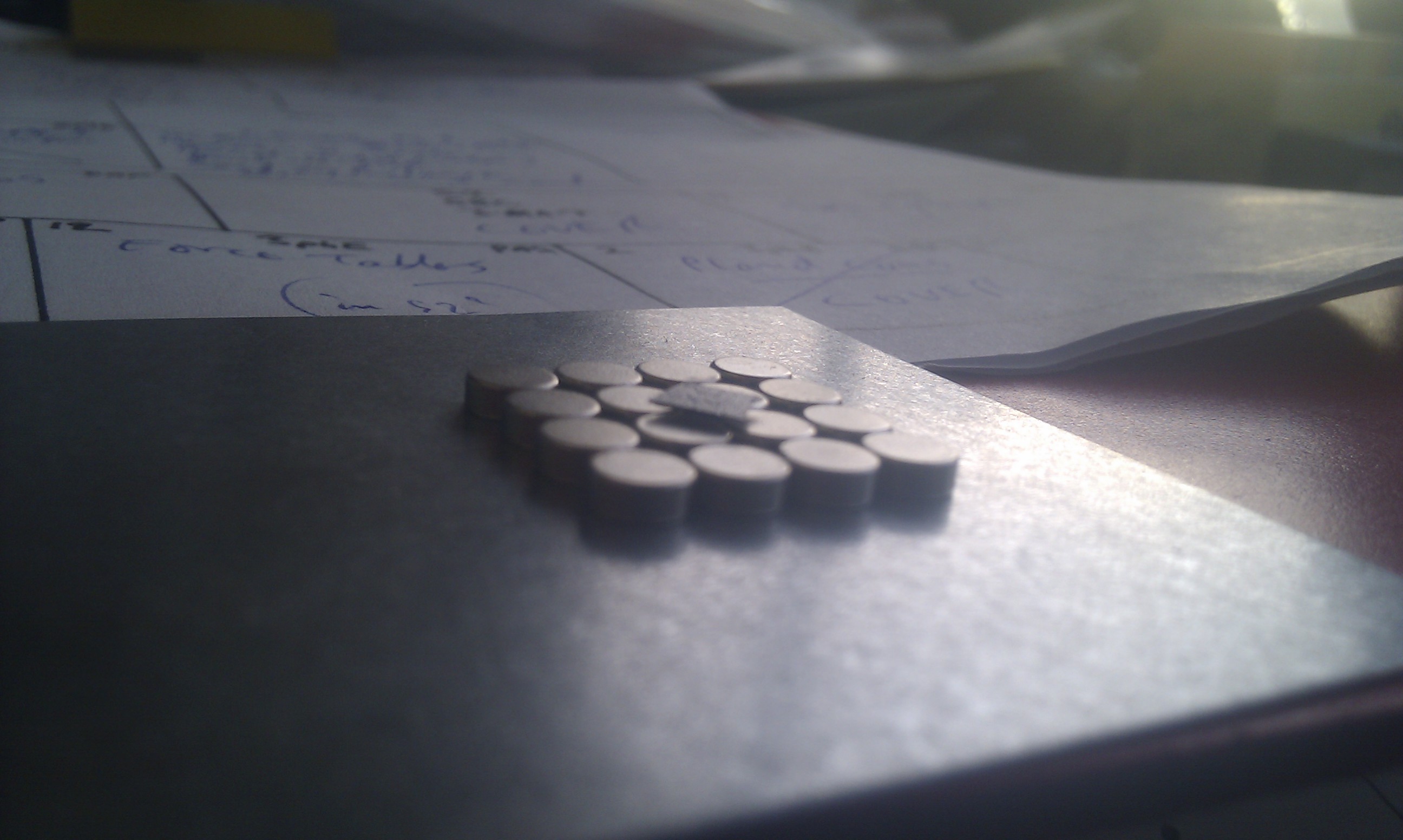
A small sheet of pyrolytic carbon levitates above an array of neodymium-iron-boron magnets.

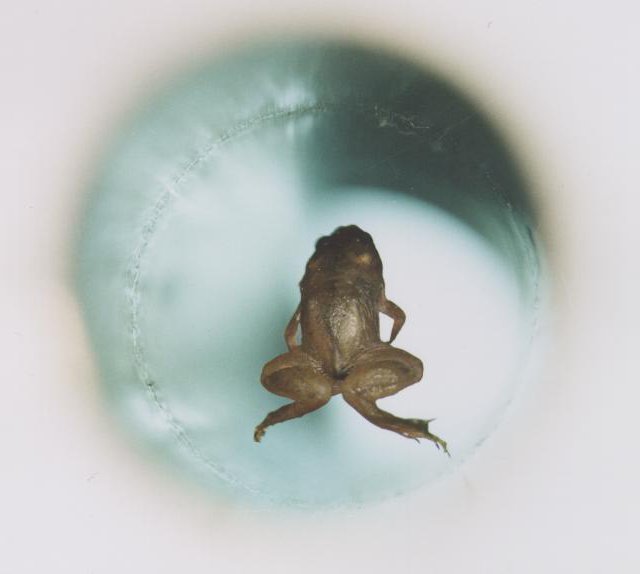
Water is weakly diamagnetic, about forty times less diamagnetic than the pyrolytic carbon shown above, but this is enough that light objects which contain a large amount of water can be levitated if placed in a very strong magnetic field.

This frog was levitated using a 16 tesla Bitter electromagnet at the High Field Magnetic Laboratory at the Radboud University Nijmegen in the Netherlands.

Consanguinity and the coefficient of relationship

Or What percentage of your genetic code do you share with your second cousin?

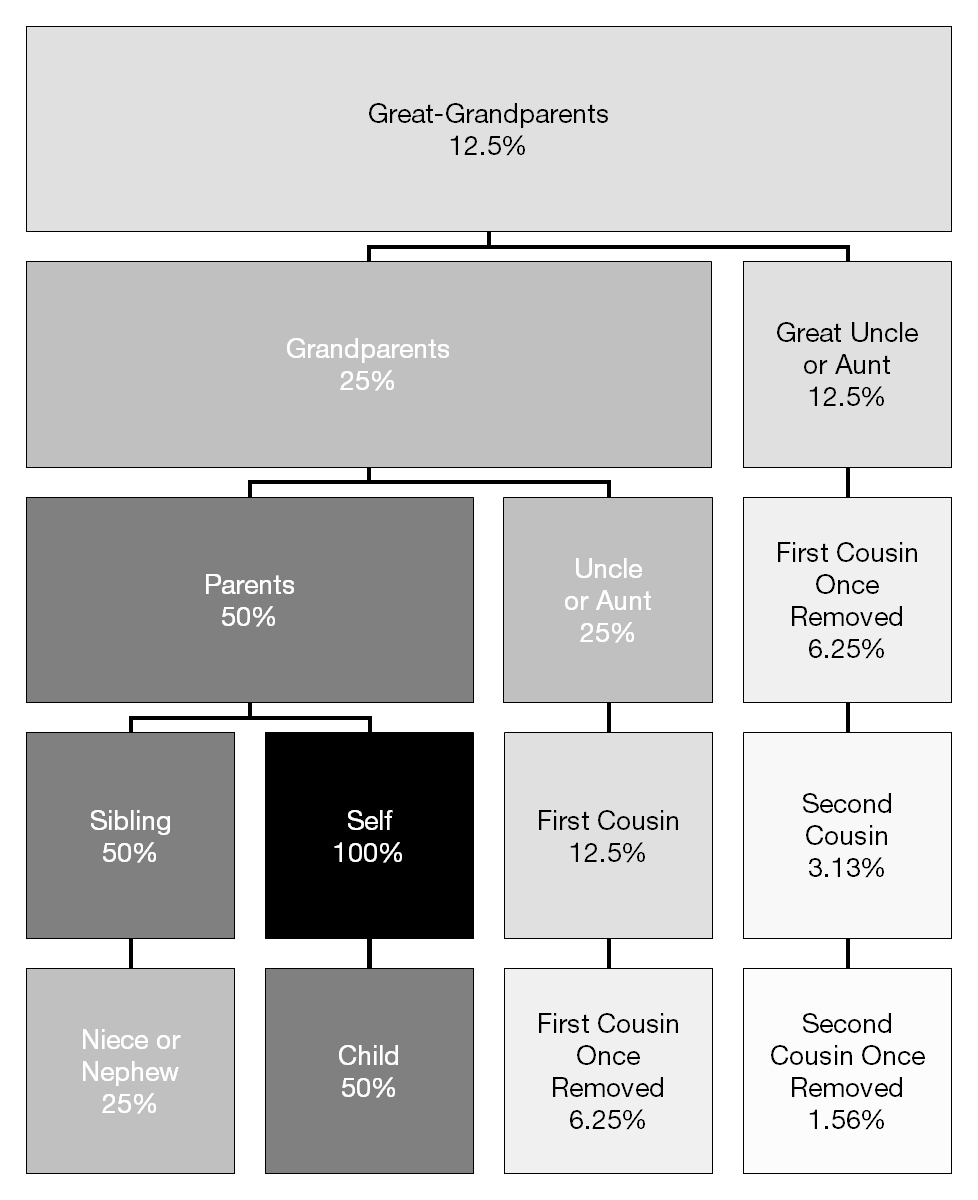
Two people who share some of their genetic code (their DNA) are said to be consanguineous (“co” meaning shared and “sanguis” being Latin for blood) and the extent to which their DNA overlaps is known as the coefficient of relationship and is measured as a percentage.

Bearing in mind that you get 50% of your genes from each of your parents, it’s relatively easy to calculate the percentage of your DNA that you share with any relative you choose.

The closer to white a relation is, the lower the amount of DNA shared with that person.

To explain where these figures come from let’s take an example: How much of my DNA do I share with my sister Caroline?

Every one of your genes is split into two parts called alleles; you get one of these two alleles from each of your parents to make up each of your genes. If we take as an example a random gene, OCA2 (a gene that controls for eye colour) it will make it easier to understand the calculation process.

I got half of my OCA2 gene from half of my Dad’s OCA2 gene and the other half of my OCA2 gene from my Mum’s OCA2 gene; the same is true for my sister. I’ll call my Dad’s OCA2 alleles ED1 and ED2 and my Mum’s OCA2 alleles EM1 and EM2. There are therefore four possibilities for my and my sister’s OCA2 genes:

  • ED1EM1
  • ED1EM2
  • ED2EM1
  • ED2EM2

With four possible choices for the OCA2 gene there is a 25% chance of us sharing 100% of our DNA, a 50% chance (25%+25%) of sharing 50% of our DNA and a 25% chance of us sharing 0%. If you sum these percentages across all of our genes you get:
(25% × 100%) + (50% × 50%) + (25% × 0%) = 50%.

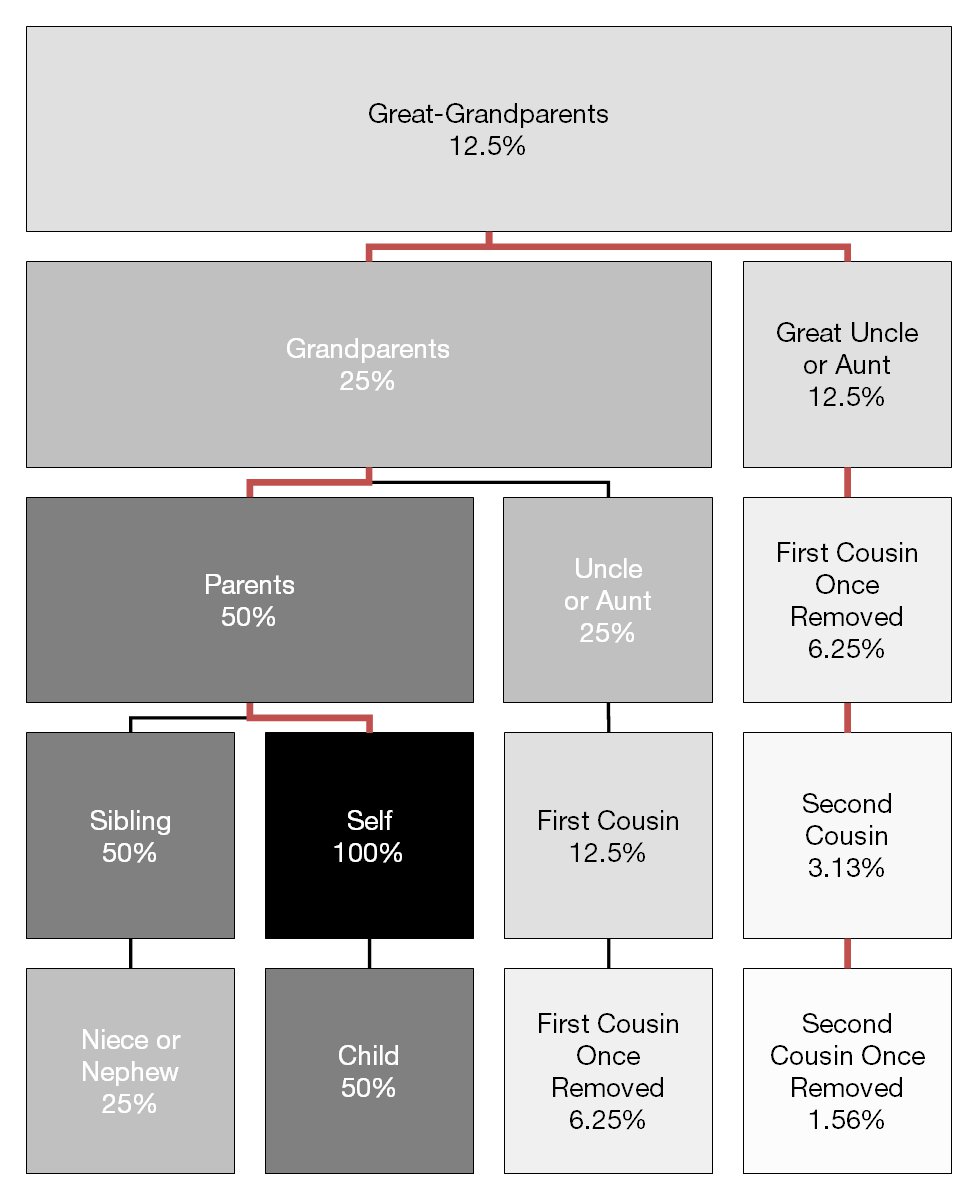
To quickly calculate the percentage of DNA you share with a relative simply count the number of (vertical) steps you have to take to get to them, and raise one-half to that power. For example, to find the percentage of DNA shared with a second cousin once removed you have to go three steps up and three steps down (the step between grandparents and great-grandparents is not counted twice) giving six steps in total. One half to the power of six is 0.015625 or 1.5625%; this is shown on the diagram below.

All of these calculations assume that none of your distant ancestors interbred with each other: i.e. that you have four unique grandparents, eight unique great-grandparents, sixteen unique great-great-grandparents and so on. Any half-relationships (e.g. half-brother, step-mother) cannot be included and of course I’m ignoring the fact that we are all related if you go back far enough.