Category Archives: General

Liquid cooling

Computer hardware produces a huge amount of heat when operating. Usually this heat is removed by a combination of heatsinks and fans

The grey heatsink conducts the heat away from the processor and the sink’s fins give the heatsink a larger surface area for the air moved by the fan to blow over. Some computers use very large heatsinks in order to do away with the need for a fan entirely, relying only on natural convection currents for cooling.

Some computers do away with fans by pumping water past the heatsink; water is a much better absorber of heat than air* and therefore the system uses less power for cooling.

Green Revolution Cooling have gone one step further – they actually submerge the computing hardware in a special non-conductive liquid. This liquid then circulates, transferring the heat away to an external evaporation tower.

They claim that their cooling system will pay for itself within 1-3 years.

* The specific heat capacity of air is 1.007 joules per gram per kelvin and the specific heat capacity of water is 4.187 J/g/K. This means that water will absorb more than four times the energy of the same amount of air for the same increase in temperature. Green Revolution don’t say what the specific heat capacity of the fluid they use is, but it’s likely to be greater than water’s.
Hacking PIN pads using thermal vision

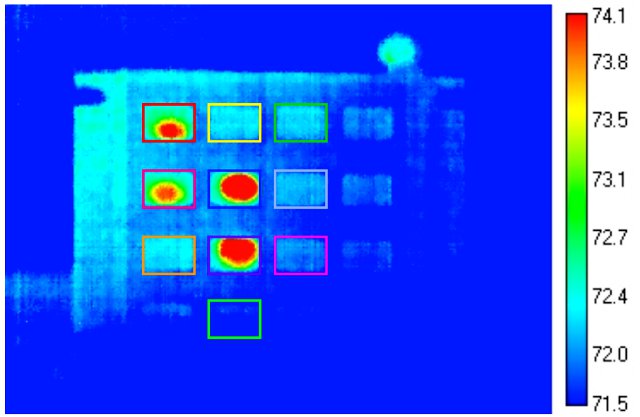
There is a mission in the first Splinter Cell computer game where you have to use your thermal vision to read a keypad code entered by a guard. Researchers from University of California San Diego have now shown that this is entirely possible.

Building on earlier work by Mike Zalewski the researchers have shown that codes can be easily discerned from quite a distance (at least seven metres away) and image-analysis software can automatically find the correct code in more than half of cases even one minute after the code has been entered. This figure rose to more than eighty percent if the thermal camera was used immediately after the code was entered.

K. Mowery, S. Meiklejohn, and S. Savage. 2011. “Heat of the Moment: Characterizing the Efficacy of Thermal-Camera Based Attacks”. Proceedings of WOOT 2011. (.PDF 9.53Mb).

Centre of mass in extreme sports

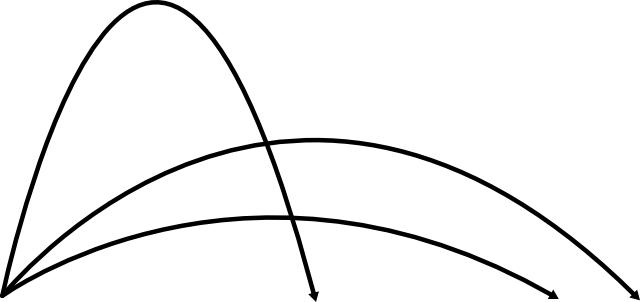
All projectiles follow similar paths (trajectories) called parabolas.

The exact trajectory followed depends on the launch angle and speed, but all have similar characteristics. In order to travel as far as possible the launch angle should be 45°.

These parabolic paths are evident in the motion of the centre of mass of any object that falls under gravity, whether it is spinning, twisting or otherwise in motion.

Here the centre of mass is on the motorbike itself, as it is so much heavier than its rider. All motorcycle jumps, regardless of the position of the rider, follow much the same path.

All photographs from the Red Bull X-Fighters website.

The physics of the Kinect

The Microsoft Kinect is a peripheral for the Xbox 360 that does away with the need for a conventional controller – instead the player’s body and voice become the controller.

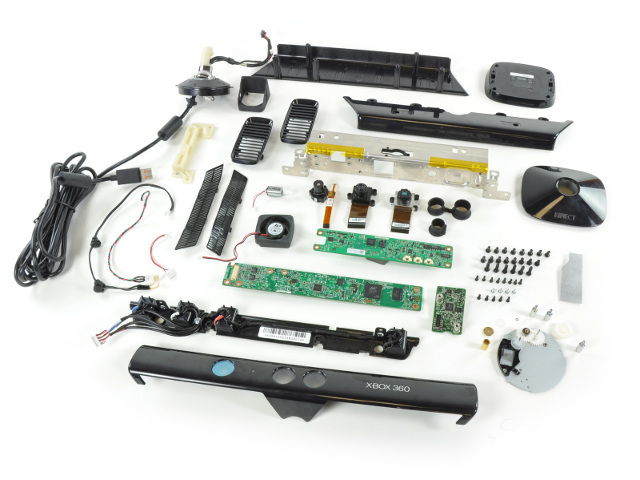
The Kinect sensor consists of:

  • 640×480 pixel visible light camera
  • 640×480 pixel infrared camera
  • Four-microphone sound sensing array
  • Class I infrared (780nm) laser diode

iFixit teardown of Kinect

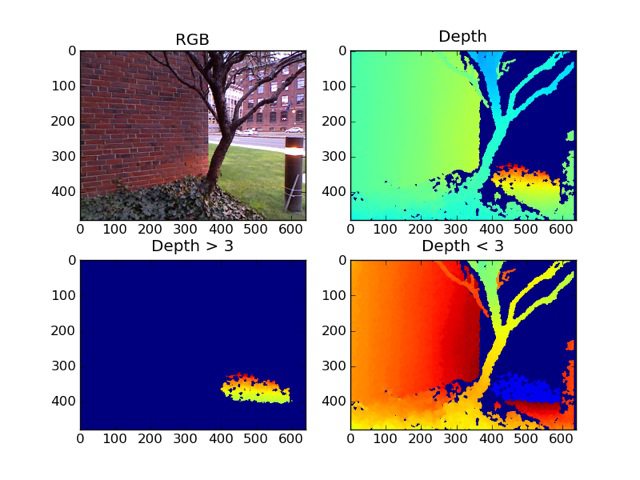
The major advantage of the Kinect is that it works in 3D. Previous console vision systems (such as the PlayStation’s structured light” created by a beam of infrared laser light passing through a diffraction grating. This projects a grid of 50000 infrared dots across the playing area. These infrared dots are visible on many cameras with a “night vision” mode.

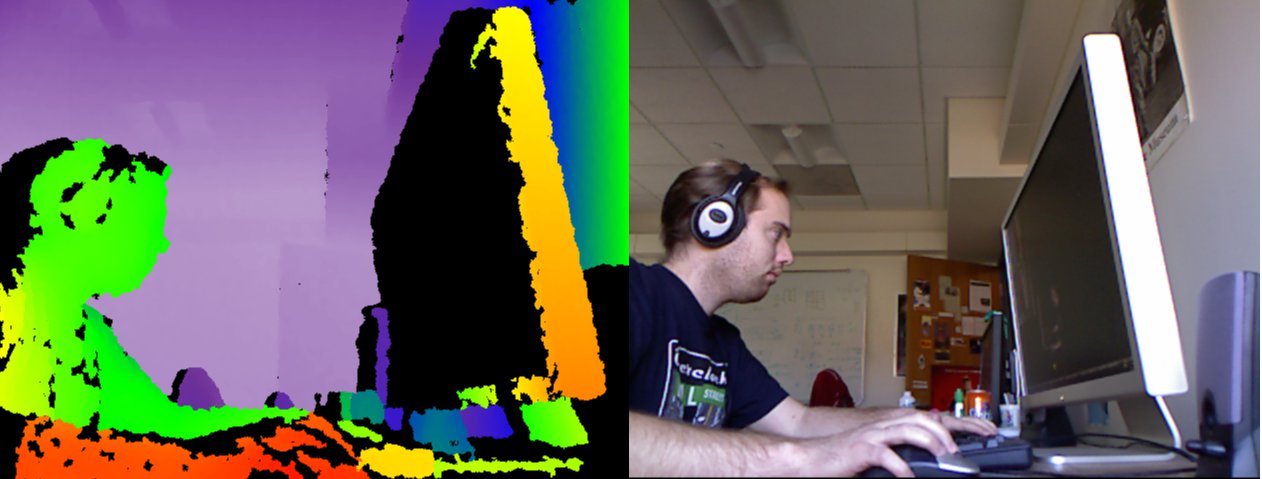
By comparing how the dot pattern looks, and how it should look, the Kinect can measure the distance between the sensor and the player – producing a “depth map” in the process.

Images from Matthew Fisher. Objects in red are closest to the screen; colours then move through the spectrum to purple objects that are furthest away.

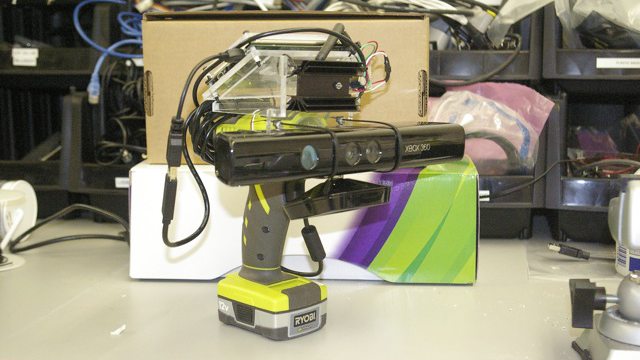
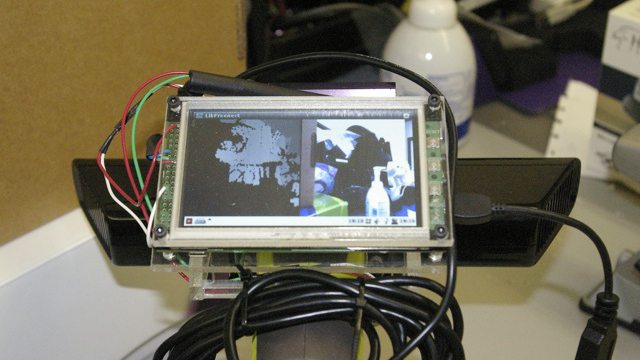
Unlike Sony, who have cracked down on anyone trying to hack the PlayStation; Microsoft have been very open to Kinect hackers; including the team from Cox Lab at Harvard who have developed a portable Kinect-based 3D camera.

* It has been shown that the depth resolution is non-linear and that the further an object is from the sensor the less information is available about its true distance.

Percent, permil and basis points

I only recently discovered the permil (cf. percent), a typographic character that enables you to give a fraction equal to one part in one thousand without using a decimal point. For example 12.3% = 123‰ (“twelve-point-three percent is equal to one hundred and twenty-three permil”).

There is also a symbol (‱) for basis points (aka permyriad), parts in ten thousand. For example 12.34% = 123.4‰ = 1234‱ (“twelve-point-three-four percent is equal to one hundred and twenty-three-point-four permil or one thousand, two hundred and thirty-four basis points”).

A large number of fonts are unable to render the permil and/or basis point symbols correctly, so the post above may be missing some symbols.