Category Archives: General

Curiosity’s RAD750 radiation-hardened computer

You can’t use just any computer on a Mars rover.

Two British Aerospace RAD750 single board computers, as used aboard the Curiosity rover.

Mars has no magnetic field and its atmosphere is very thin, about 0.6 kilopascals compared with Earth’s 101 kilopascals. This means that the surface of Mars is bathed in cosmic ray radiation, about 500 millisieverts per year according to an instrument aboard the Curiosity rover. This is about one thousand times the dose on Earth.

The charged particles that make up cosmic ray radiation smashing into electrons in electronic circuitry can knock them loose and cause noise and current spikes. This can turn a binary 0 into a binary 1 or vice versa (a “bit flip”) and thus any computer hardware travelling outside Earth’s protective bubble must be “hardened” to protect it from radiation.

There are a number of ways that hardware can be hardened:

  • By the use of physical shielding, such as lead or tungsten, designed to stop energetic particles from reaching components.
  • By replacing the semiconductor wafers on which chips are built with insulators such as sapphire (aluminium oxide). It is orders of magnitude harder to knock electrons loose from an insulator than from a semiconductor.
  • By replacing the Dynamic RAM (DRAM) used in regular computers with the bulkier and more expensive Static RAM (SRAM) that is less susceptible to bit flips.
  • By the use of error-correcting code in the computer’s code that checks for the damage (e.g. bit flips) caused by energetic particles.

The RAD750 single board computer manufactured by British Aerospace is a favourite of spacecraft designers, even at a cost of $200 000 per unit. The RAD750 has been used on board Curiosity, Juno, the Solar Dynamics Observatory, the Wide-field Infrared Survey Explorer, the Lunar Reconnaissance Orbiter, the Kepler habitable exoplanet observatory, the Fermi gamma-ray space telescope and the Mars Reconnaissance Orbiter.

Cosmic Latte

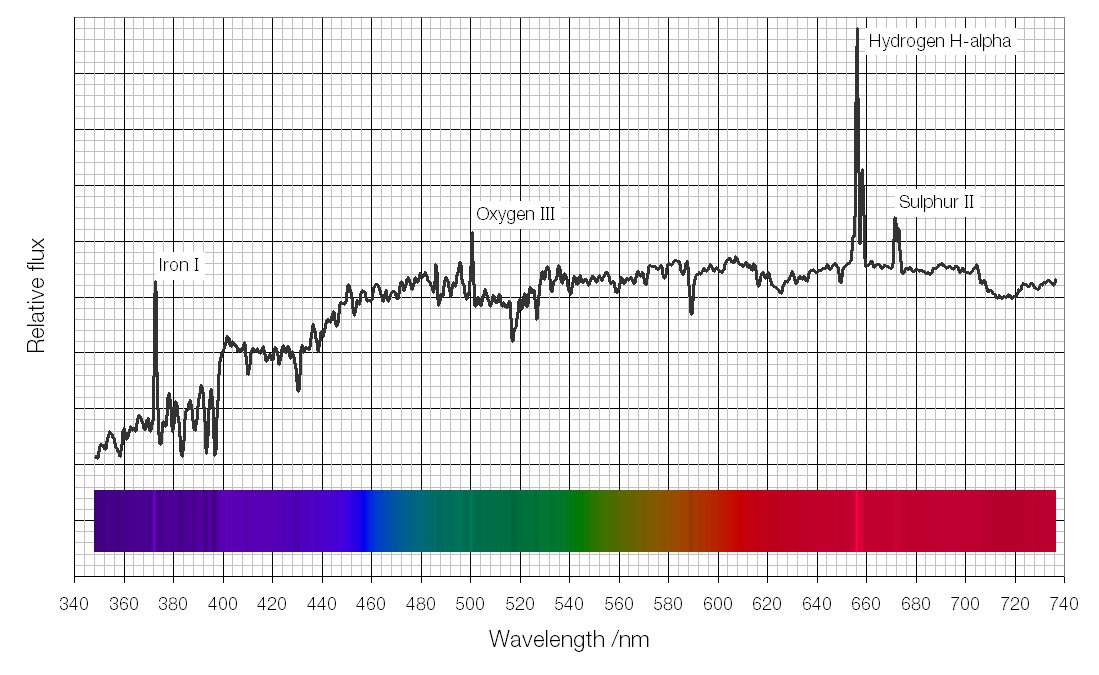
Cosmic Latte is the jokey name given to the overall colour of the Universe. If all the different wavelengths and intensities of light in the Universe were added together, the result is the light beige colour seen above.

The raw data from the study* is shown below.

Click to enlarge

A number of peaks are visible in the spectrum, in particular the H-alpha line emitted by ionised hydrogen gas.

* Ivan Baldry et al, “The 2dF Galaxy Redshift Survey: Constraints on Cosmic Star Formation History from the Cosmic Spectrum”, The Astrophysical Journal 569:582-594 (2004). DOI: 10.1086/339477.

Coloured blood

One of the main purposes of blood is the transport of oxygen around the body; this oxygen is required for cellular respiration and without it cells in the body will die.

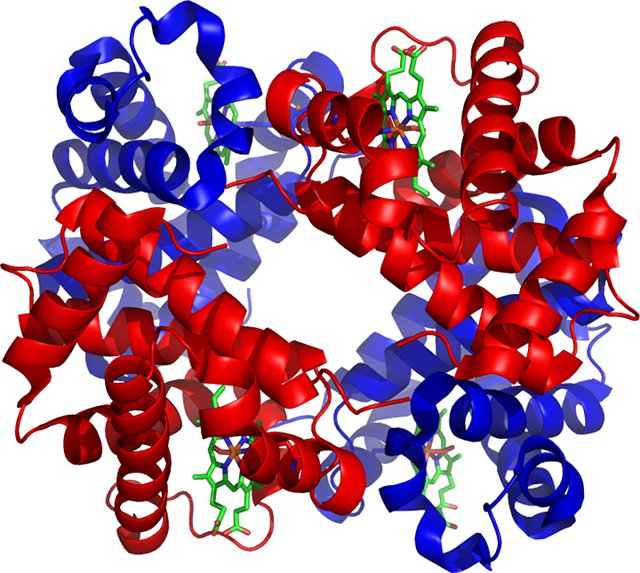
In humans and other vertebrates, oxygen is transported in the blood by a protein called haemoglobin that is contained within red blood cells. Each haemoglobin molecule contains four iron ions to which an oxygen molecule can bind. The oxyhaemoglobin that is formed when oxygen molecules bind to haemoglobin is bright red, which gives blood its red colour.

A haemoglobin molecule. The oxygen binding sites are at the centre of the green haem groups.

It is possible for humans to develop blood with a greenish hue if suffering from a condition called sulphaemoglobinaemia, in which a sulphur atom is incorporated into the haemoglobin molecule.

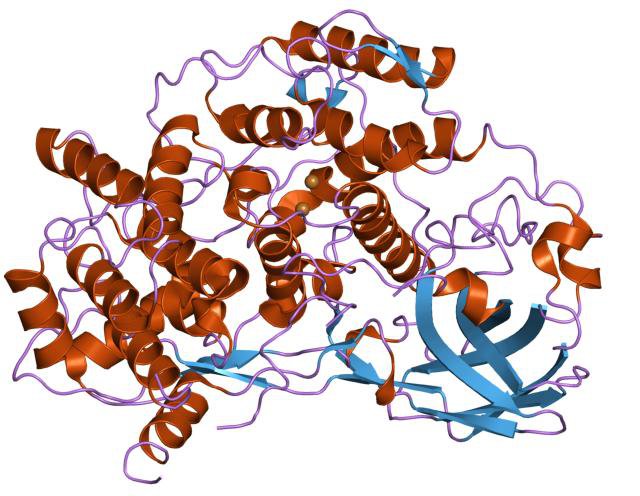
But haemoglobin is not the only molecule capable of transporting oxygen in blood. In molluscs like crabs, octopuses, oysters, slugs, snails, squid, worms and many others, oxygen is transported by haemocyanin, which contains copper rather than iron.

A haemocyanin molecule. The oxygen binding site is at the centre, in between the two copper atoms.

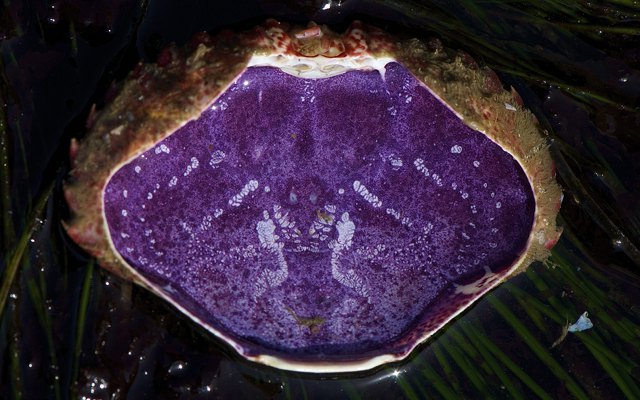
Deoxygenated haemocyanin is grey or pale yellow, and when oxygenated (for example by exposure to air) the oxyhaemocyanin is a dark blue colour.

The interior of a crab shell. The purple colouring is due to the presence of oxyhaemocyanin.

There are a number of other oxygen-binding proteins found in nature which give rise to a number of different blood colours. For example, haemerythrin gives some annelids and marine invertebrates pink/violet or clear blood; annelids also use chlorocruorin which gives them red or green blood.

You can see more than half of a neutron star

Common sense dictates that if you look at a spherical object like a ball or a planet you can only see half the surface area of that object. But this is not true for neutron stars.

A neutron star is formed when the core of a relatively large star collapses in on itself in a supernova. Neutron stars are incredibly dense: one teaspoon of neutron star can have a mass of more than five trillion kilograms.

One of the best elaborations of Einstein’s Theory of General Relativity was given by John Wheeler:

“Mass tells space-time how to curve, and space-time tells mass how to move.”

But if space-time is curved then anything passing through space, whether it is matter or light, will follow a curved path. The gravitational field of a neutron star is so strong that it warps space, and warps space to such an extent that light emitted behind the star is warped around.

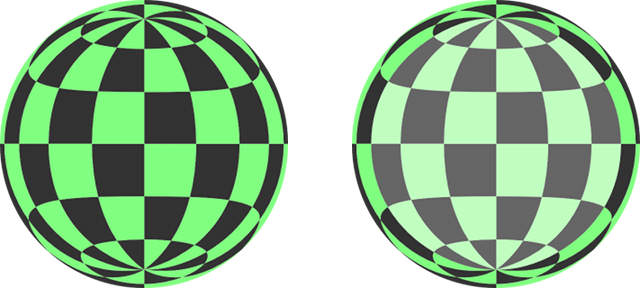
Diagram of a neutron star, viewed face-on.

In the diagram above each chequered section is 30° × 30°; note that both poles of the neutron star are clearly visible. The highlighted section on the right-hand diagram shows the area that would normally be visible if gravitational distortion were not present.

Normally 180° of latitude and longitude would be visible, but in this case the figure is nearly 260°, meaning that more than 70% of the neutron star’s surface area is visible.