BWAHAHAHAHAHAHAHAHA!

Seriously. I am not making this up. This is a real animal.
ESA has been showing off its new space telescope, Herschel.
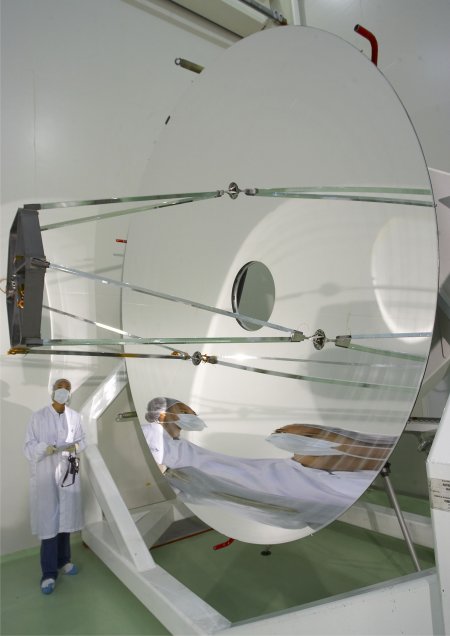
At 3.5m Herschel has the largest mirror of any space telescope and will study “the formation of galaxies in the early universe and their subsequent evolution, the creation of stars and their interaction with the interstellar medium, the chemical composition of the atmospheres and surfaces of comets, planets and satellites and the molecular chemistry of the universe”.
Google has expanded Google Maps to include the Moon.
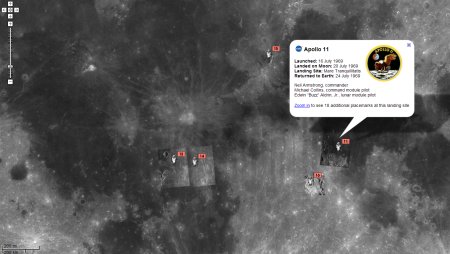
With Google Moon you can explore the Moon’s surface and look at photographs taken by the Apollo missions.
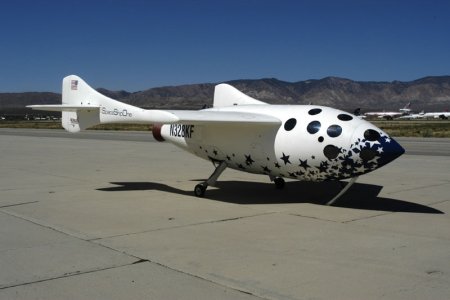
The Ansari X-Prize was a $10 million competition for commercial ventures to fly a spacecraft into space which was eventually won by Burt Rutan‘s SpaceShipOne:
Now Google has taken things up a notch by offering a $30 million prize for the first company to land a rover on the Moon’s surface.
Lightest – The Electron Neutrino
0.0000000000000000000000000000000000036kg
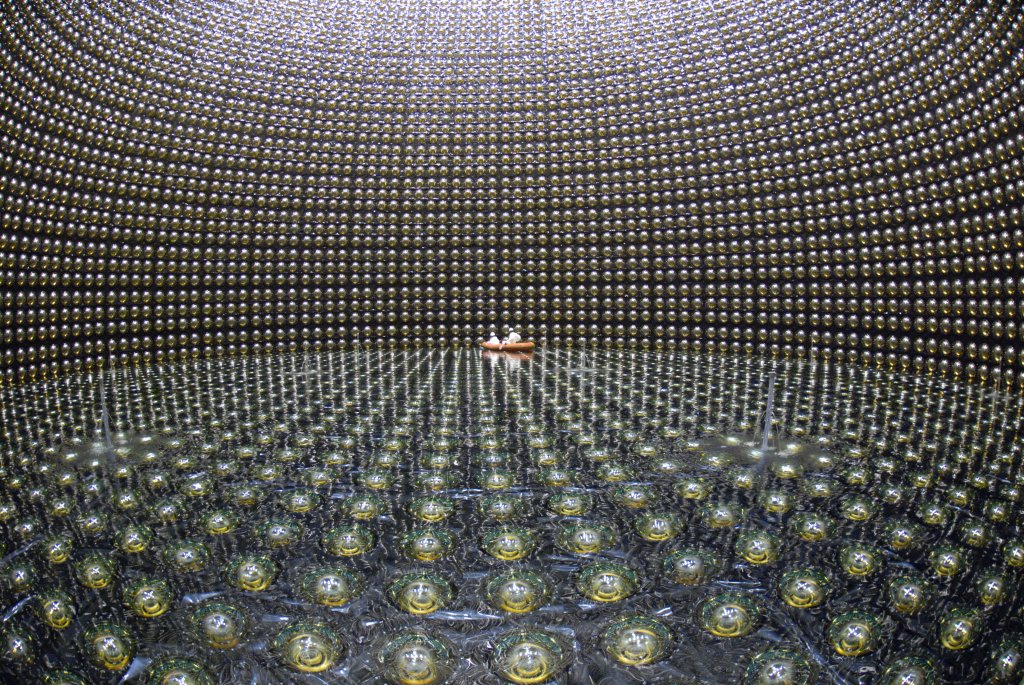
The electron neutrino is so light that it’s very difficult to detect; any detector needs to be buried deep underground where other particles can’t reach it and it needs to be very, very big.
The Super Kamiokande neutrino detector consists of nearly 50 million kilograms of pure water surrounded by 11,200 photomultiplier tubes buried 1000m underground. The photograph below shows workers in an inflatable boat working on one of the detectors.
Heaviest – The Universe
30000000000000000000000000000000000000000000000000000kg
Even though its average density is 300 billion billion billion times less than water’s, the Universe is so huge that it still manages to weigh in with the largest mass.
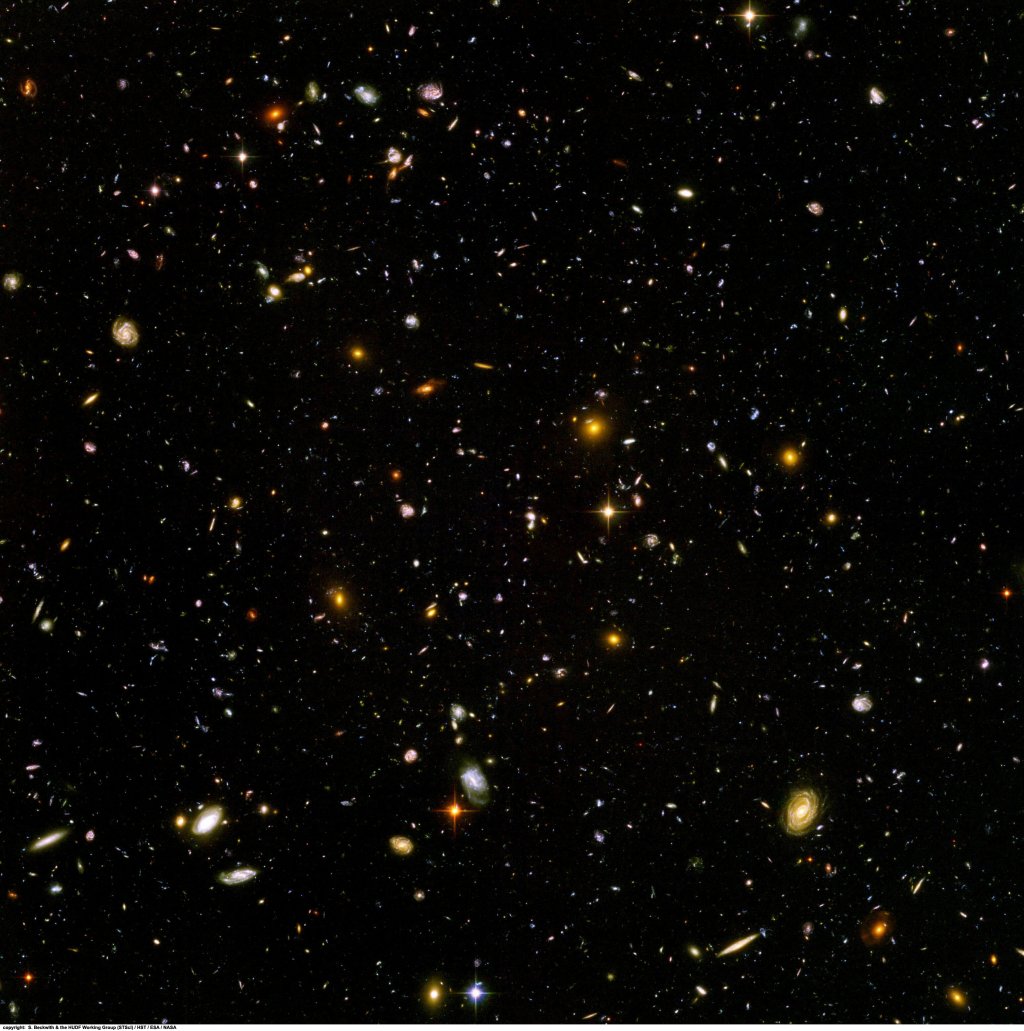
The image below is the Hubble Ultra Deep Field image – a picture of a huge expanse of space containing at least 10,000 of the Universe’s earliest galaxies.