
This photograph was the winner in Nikon’s Small World microscopy competition. The embryo itself is shown in red, and the “yolk-sac” is shown in green.
There are more amazing images in a WIRED Science gallery.
This photograph was the winner in Nikon’s Small World microscopy competition. The embryo itself is shown in red, and the “yolk-sac” is shown in green.
There are more amazing images in a WIRED Science gallery.
Where will the world’s third largest rollercoaster be built next year?
If you thought “in a theme park” then you’d be wrong.

The Ares Emergency Egress System (EES) is designed to help astronauts evacuate the launch pad very quickly in case of emergency.


The new Titan³ scanning/transmission electron microscope from FEI Company has a maximum resolution of 0.05 nanometres, or one-quarter of the diameter of a carbon atom.

Mimosa pudica, also known as ‘The Sensitive Plant’ is one of only a few plants that undergoes “rapid plant movement“.
What does that mean? It’s very simple – it’s a plant that reacts to touch!
Tardigrades, also known as water bears, are nature’s toughest animals.

They can survive in temperatures from close to absolute zero (270°C below freezing) to more than 150°C.

They can survive without water for more than 10 years and withstand a dose of radiation equivalent to having more than 4 million X-rays taken.
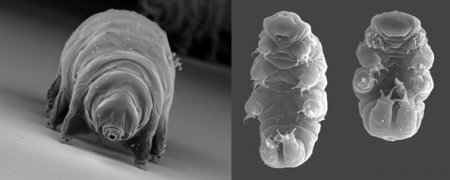
And apparently, they can also survive in the vacuum of space.