Quotation Marks and Guillemets

In many languages, quotation marks are used to indicate that the source of a piece of text is not the author, but that the author is directly quoting someone else.

“The cat sat on the mat,” said the man.

Quotation marks can be double or single, and the nesting of double and single quotation marks is used to indicate when the person being quoted is themselves quoting someone else.

“Can you believe she said ‘The cat sat on the mat’?” asked the man.

In many languages, quotation marks are not used like this. German uses the same marks, but in different positions.

Sagte der Mann: „die Katze saß auf der Matte”.

In many languages, marks called guillemets are used instead.

« Le chat était assis sur le tapis, » dit l’homme.

In French (except Swiss French) spaces are placed between the marks and the speech, but in most languages that use guillemets (Arabic, Greek, Italian, Portuguese, Russian, etc.) there are no spaces, as with quotation marks. Some languages occasionally use guillemets pointing in the other direction (e.g. Danish):

»Katten sad på måtten,« sagde manden.

In some languages, (e.g. Polish) guillemets are used within quotation marks to indicate a quotation of a quotation, as with nested quotation marks as explained above.

„Czy uwa?asz, ?e powiedzia?a «kot siedzia? na macie»?”.

I’d be interested to hear from any MrReid.org readers on how quotations are indicated in their languages.

Apologies to any native speakers of the languages above. Blame Google Translate.

Analemma

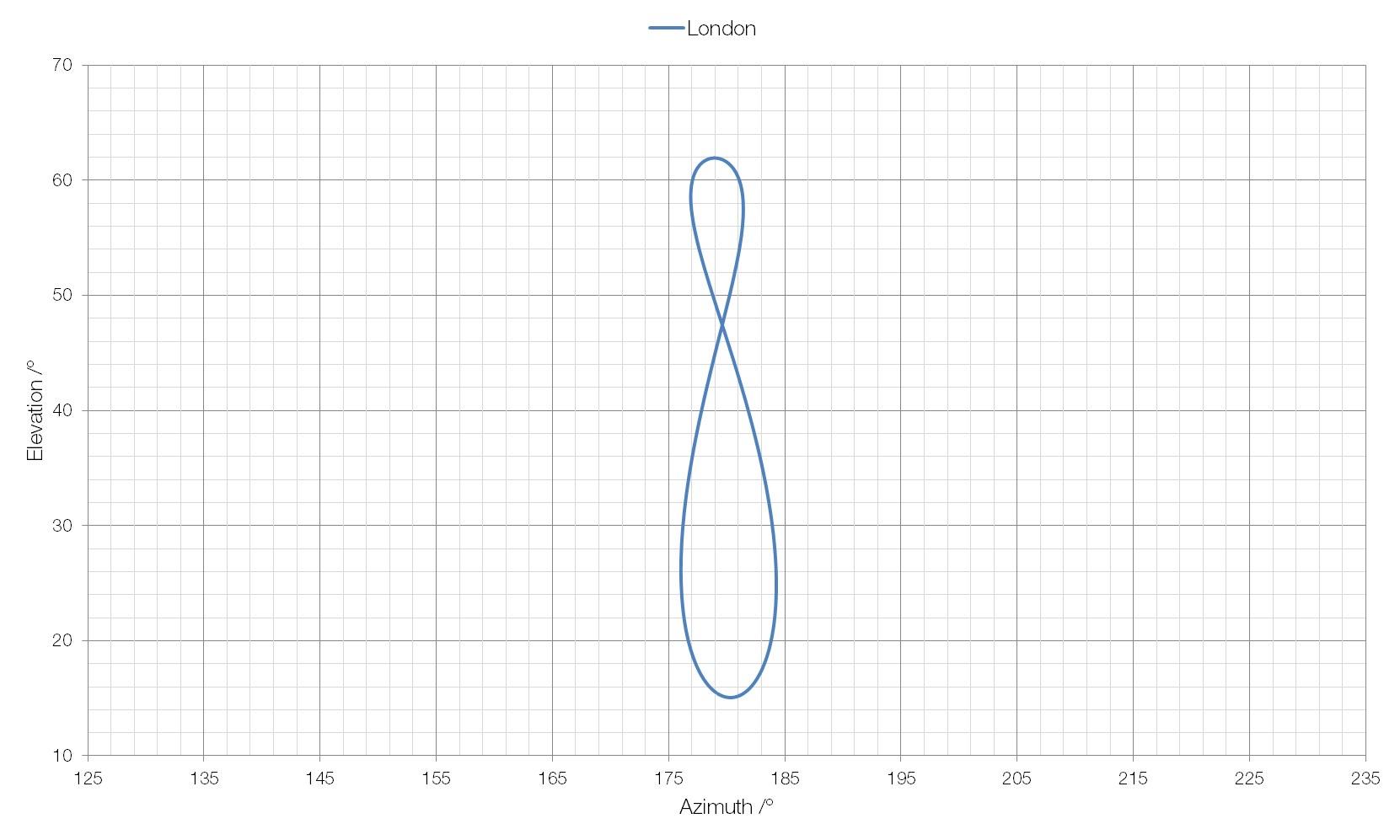
If you took a picture of the Sun every day at noon and then compared the position of the Sun in each of the photographs you’d find that it was in a different place every day. If you joined the positions of the Sun together you’d form an analemma.

analemma-trinity

Source

An analemma of the Sun’s position as measured from London is shown above. Elevation, on the y-axis is the angle between the horizon and the Sun, and azimuth, on the x-axis is the compass bearing of the Sun (for example, 90° is due east and 180° is due south).

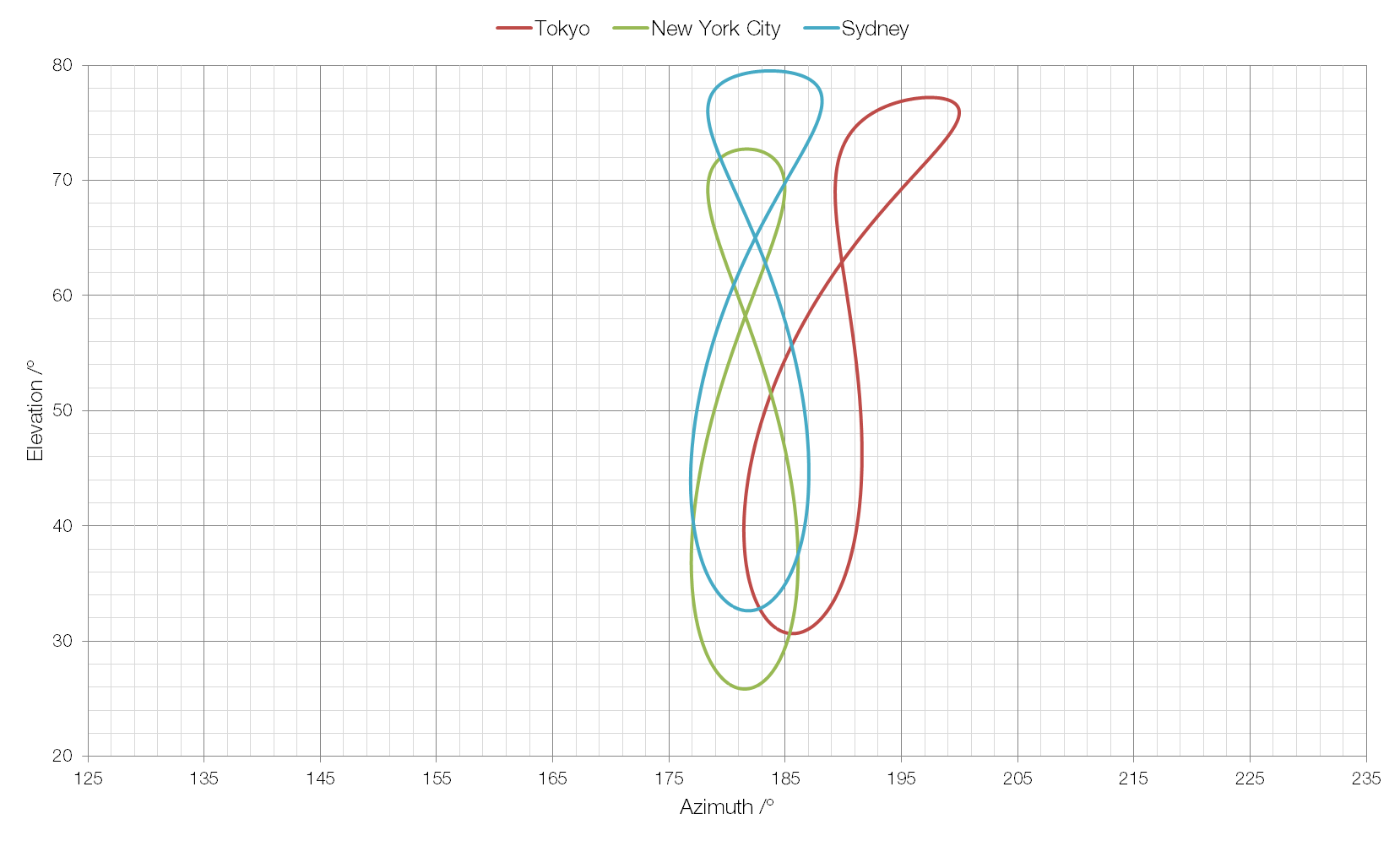
The shape and size of a solar analemma will vary depending on your position on Earth.

analemma-tokyo-newyork-sydney

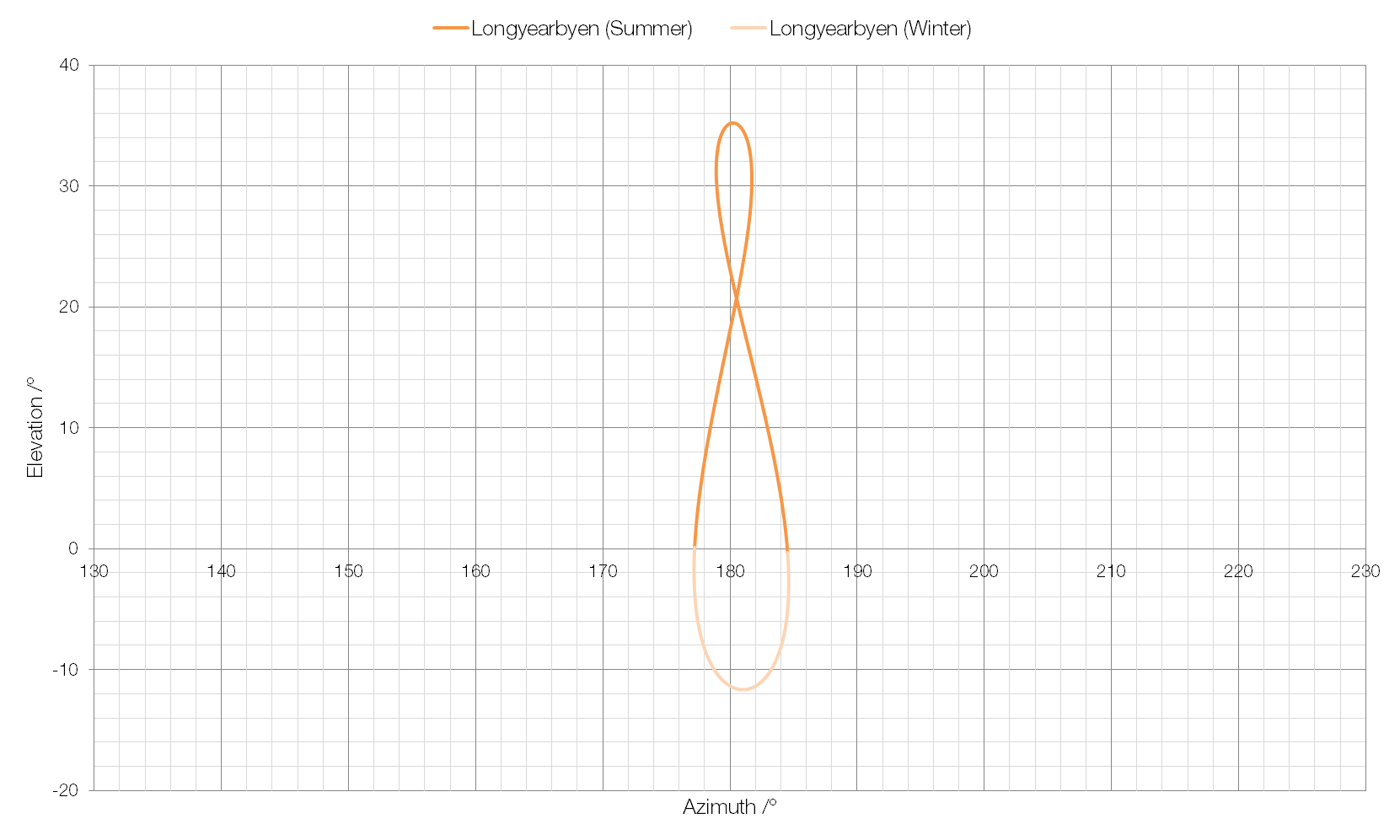
In some cases, such as in Longyearbyen, the world’s northernmost town, the Sun does not rise above the horizon on some days.

analemma-longyearbyen

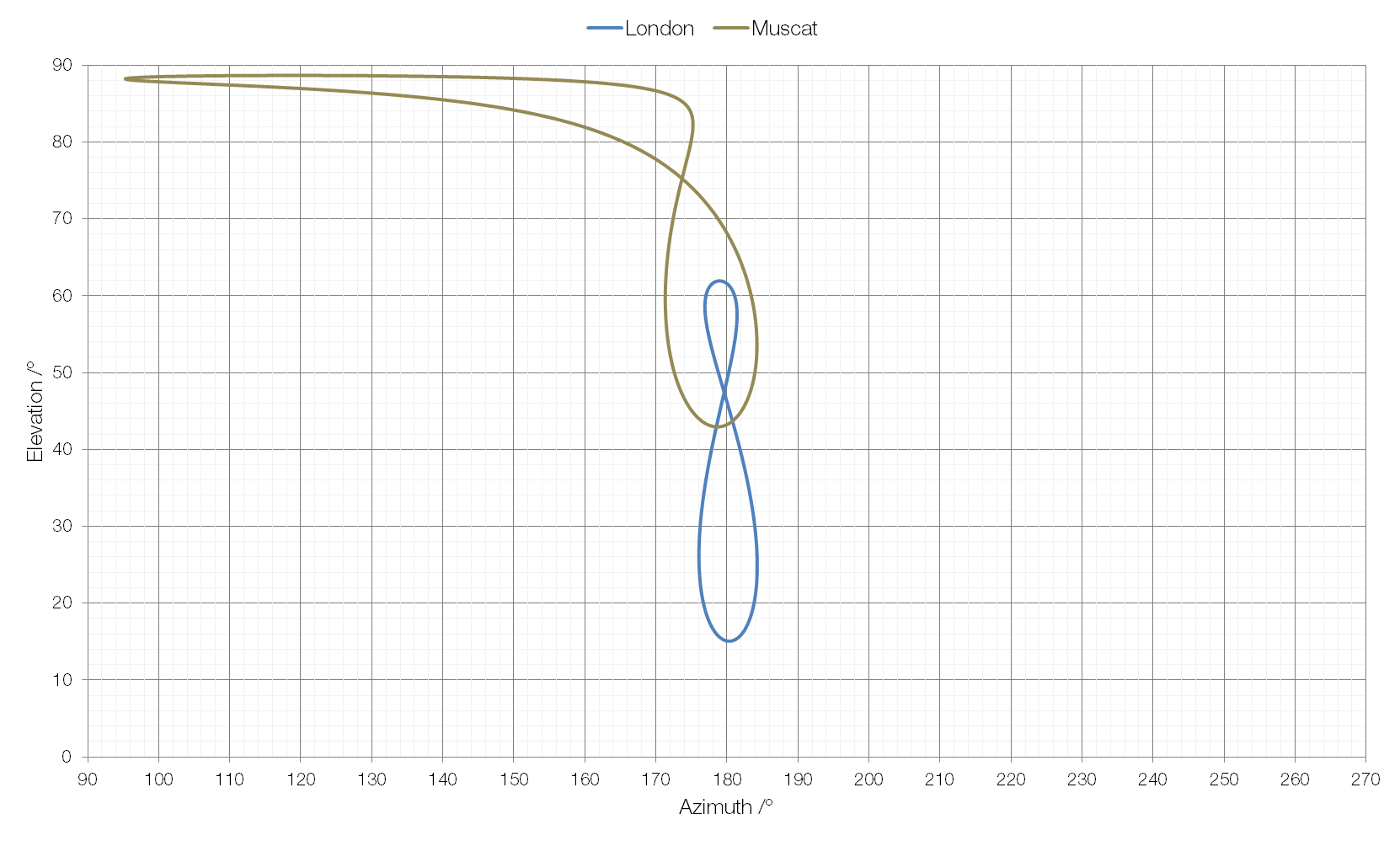
At locations near the Tropics of Cancer and Capricorn, for example Muscat in Oman, the analemma has a very “lopsided” shape.

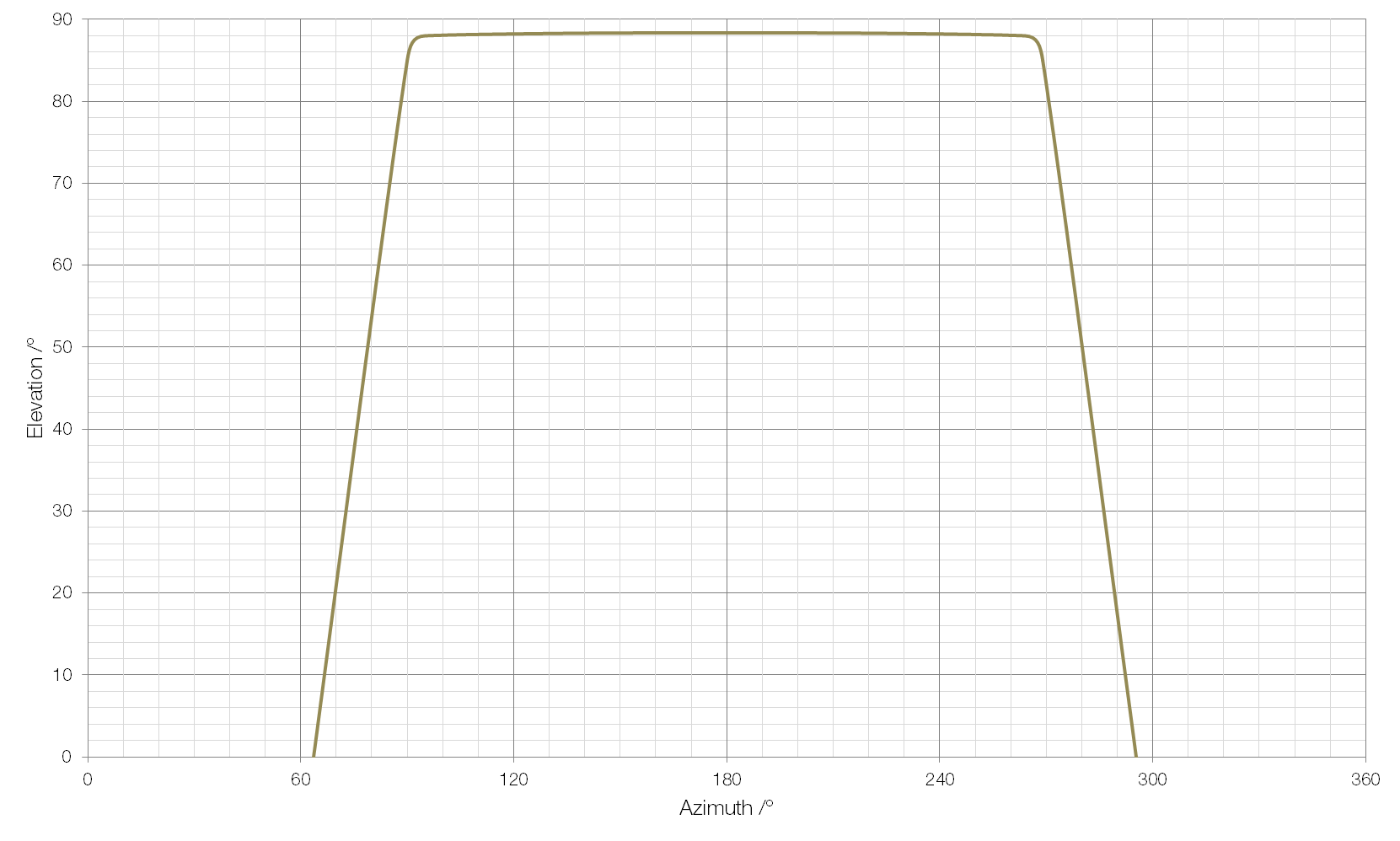
As you can see, at some points in the year (around the Summer Solstice) the Sun is almost due east, even at noon. This is because the Tropics of Cancer and Capricorn are the northernmost and southernmost points respectively at which the Sun can appear directly overhead, and here the Sun rises around east-northeast and sets around west-northwest, rather than east and west. Suncalc allows you to play with location and the time of year to visualise the position of the Sun during the day.

sunposition-muscat

The position of the Sun during the summer solstice as seen from Muscat.

How Fast Can You Spin?

Imagine you have a cylinder, of any dimensions (i.e. it can be flat like a CD, or tall like a drink can). How fast can you possibly rotate that cylinder?

When an object is spun, the centrifugal forces in its rotating reference frame try to pull it apart. It turns out that the maximum speed that the outside edge of a cylinder can rotate at is given by:

v_{max} = \sqrt{\frac{\sigma}{\rho}}

where \sigma is the ultimate tensile strength of the material and \rho is the material’s density.

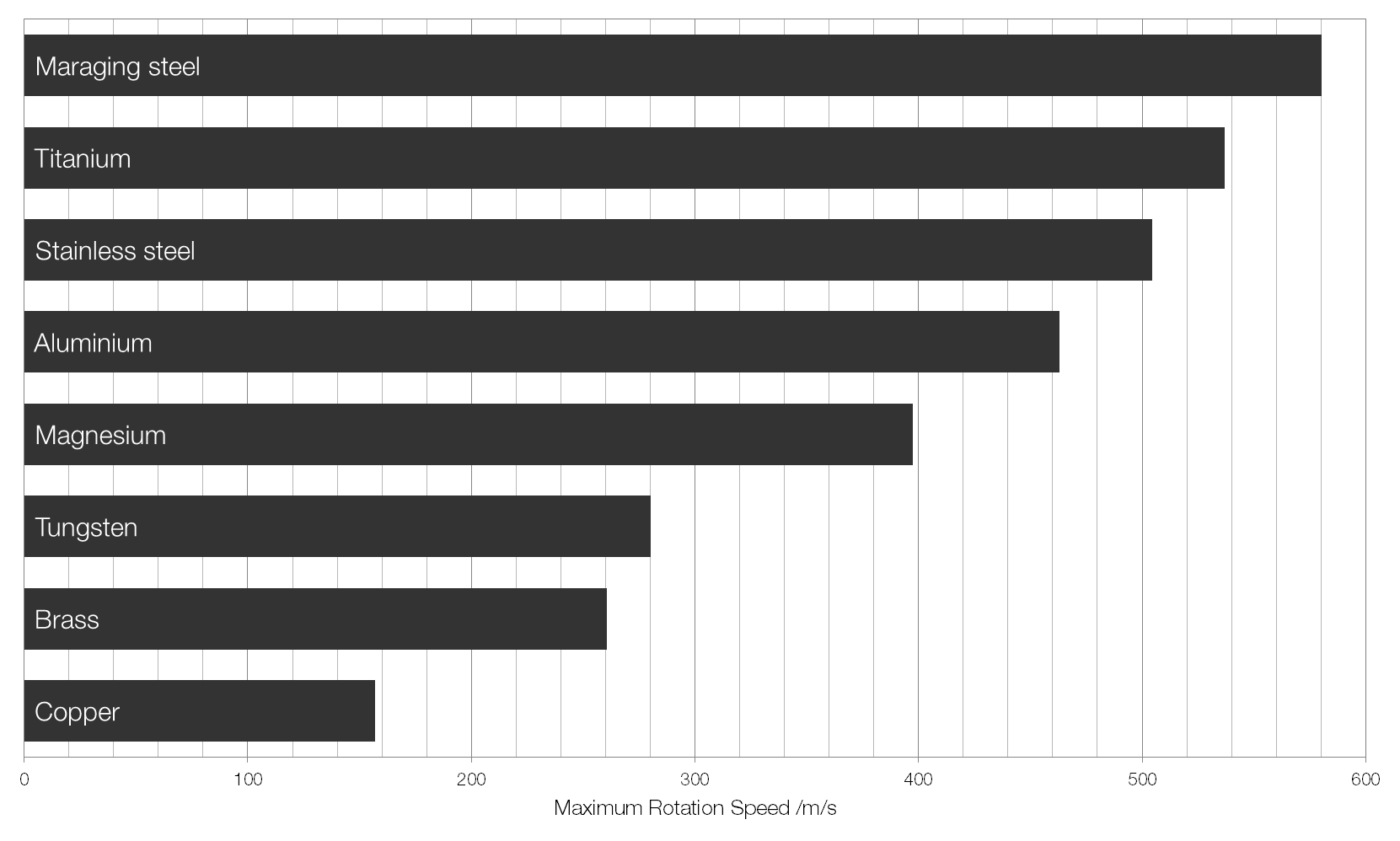
maximum-rotation-speed-metals

The largest value for metals is that of maraging steels, whose production and distribution is carefully monitored, as it can be used in fast-rotating uranium enrichment centrifuges. (It is also used in the construction of golf clubs and some specialist bicycles.) These centrifuges spin at speeds up to 1500 revolutions per second (90 000 revolutions per minute) and are therefore right on the edge of the capability of the steel to hold itself together.

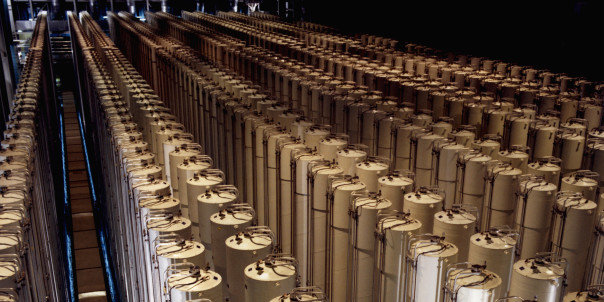
centrifuge-cascade

A cascade of uranium centrifuges.

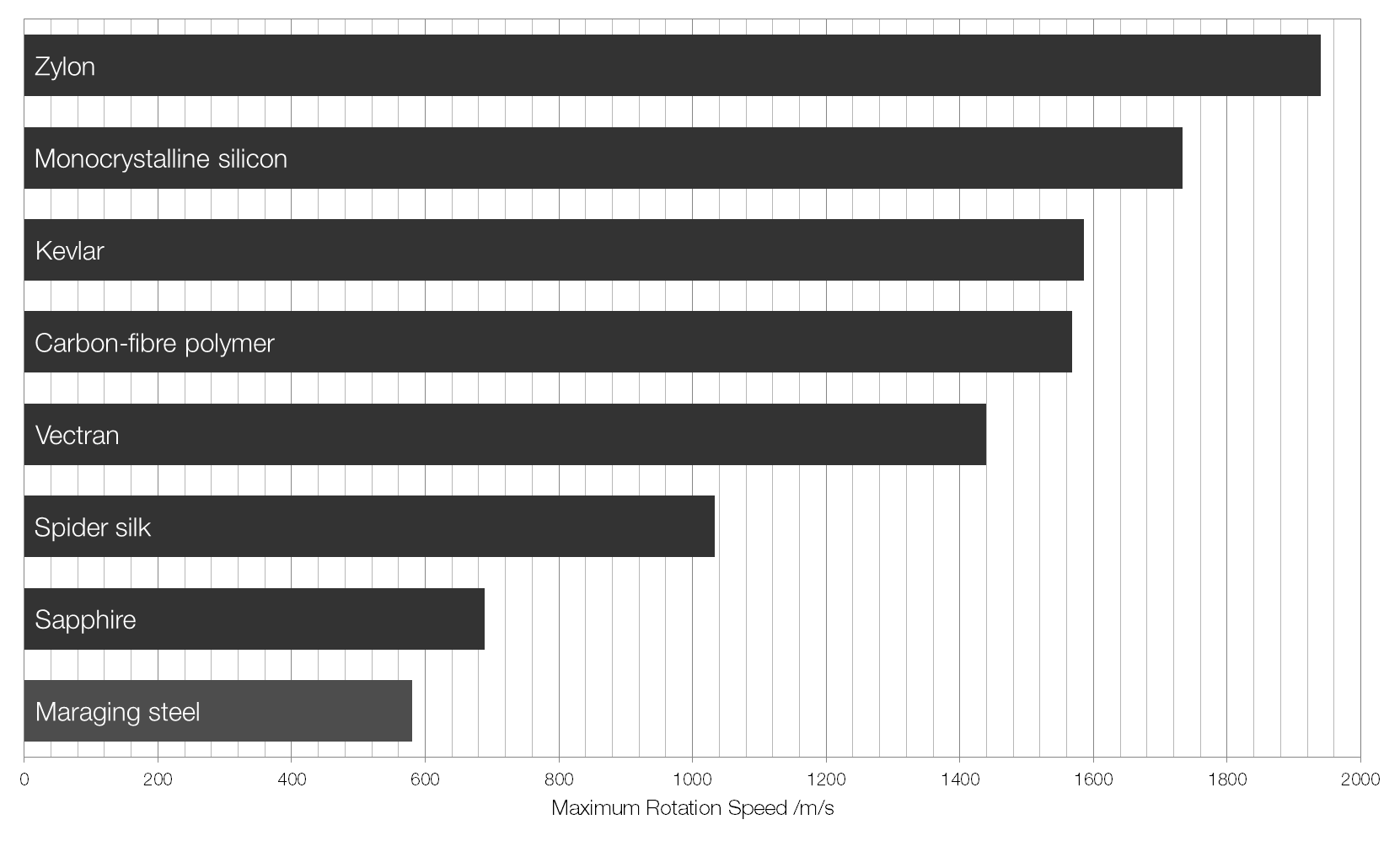
You would be forgiven for thinking that metals would score best in this particular test, but even the strongest metals are easily beaten into submission by crystals and carefully crafted polymers like Vectran™Kevlar™, and Zylon™.

maximum-rotation-speed-other

Change in Day Length with Latitude

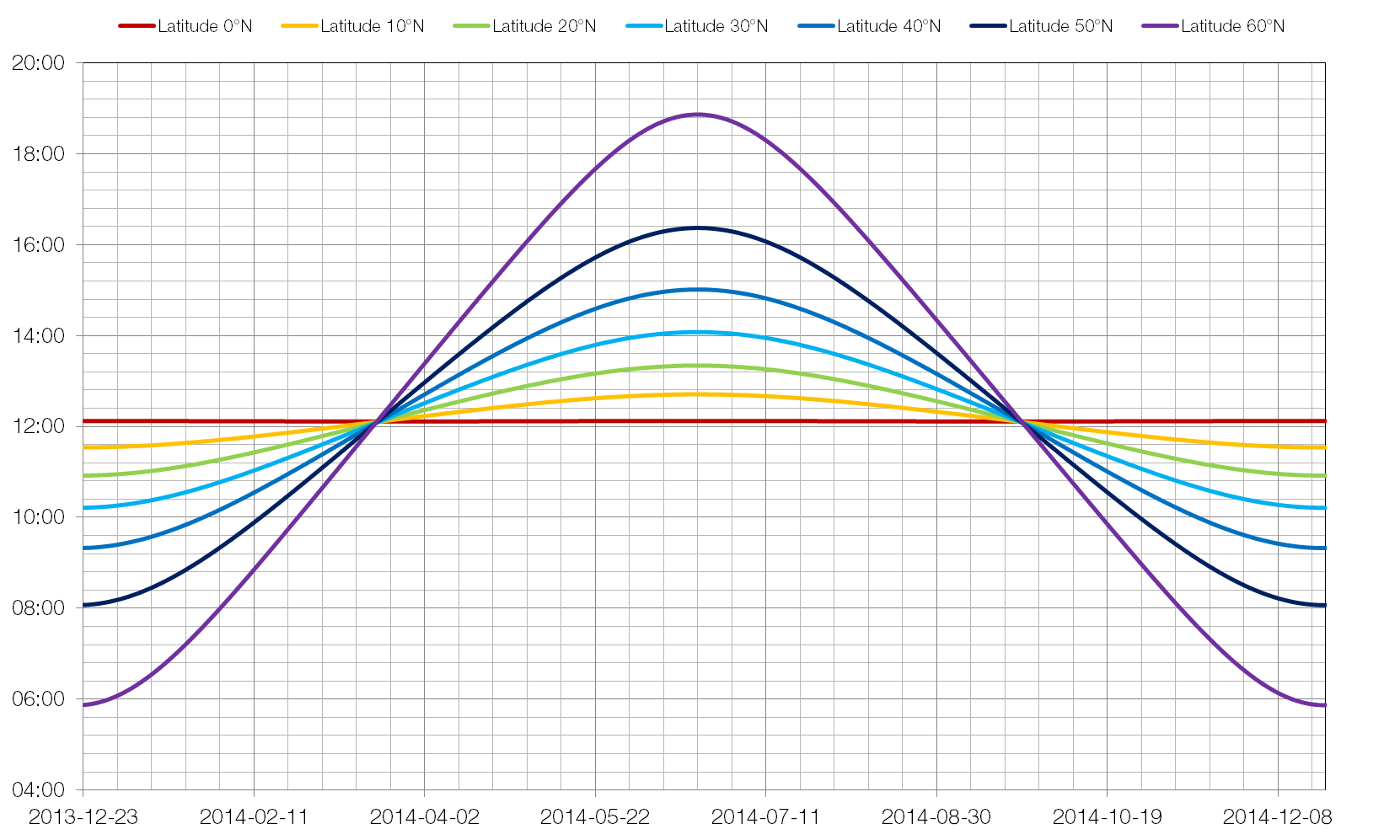
As the Earth moves around the Sun, the length of the day (defined as the time between sunrise and sunset) changes. The extent to which it changes depends on latitude, as shown in the graph below:

As you can see, the length of a day changes far more during the year at higher latitudes than at lower latitudes. (Latitudes beyond 66°33′ are not shown because the Sun does not always rise or set at these latitudes.) The graph runs from one winter solstice to the next, with the two equinoxes clearly visible in March and September.

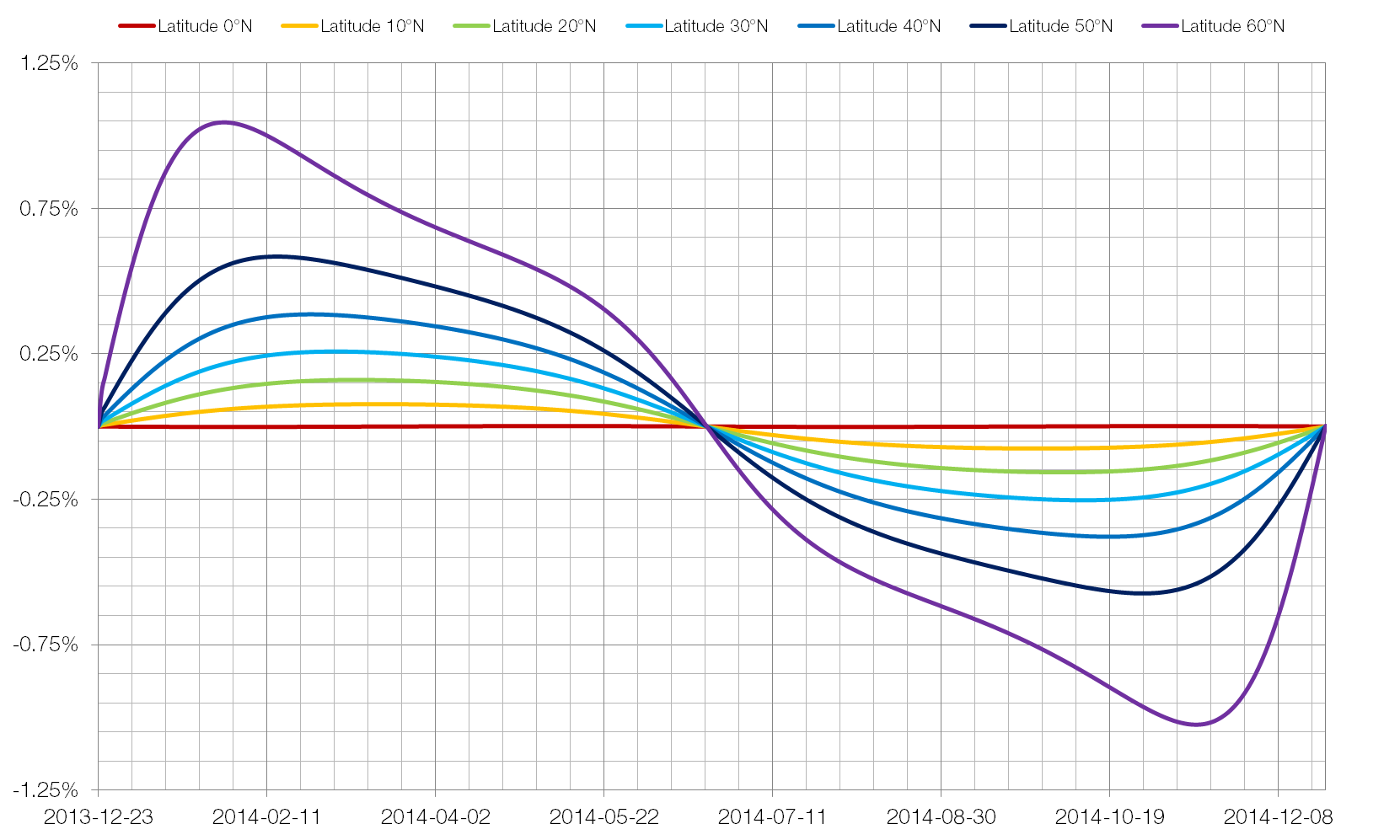
It’s quite interesting to look at by how much the length of a day changes every day. This graph would have the same shape as the previous one, but not if we look at percentage change. In a way, this gives an impression of how quickly it appears that “the nights are drawing in”. percentage-change-day-length

At higher latitudes the length of day changes quite noticeably in early January and mid-November.  In some situations two adjacent days are different in length by nearly five minutes, and at some points the day loses nearly fourty minutes over the course of a single week.